October 30, 2026
European PV Ingot Manufacturing: Challenges and Opportunities
The global PV market and Europe’s manufacturing ambitions
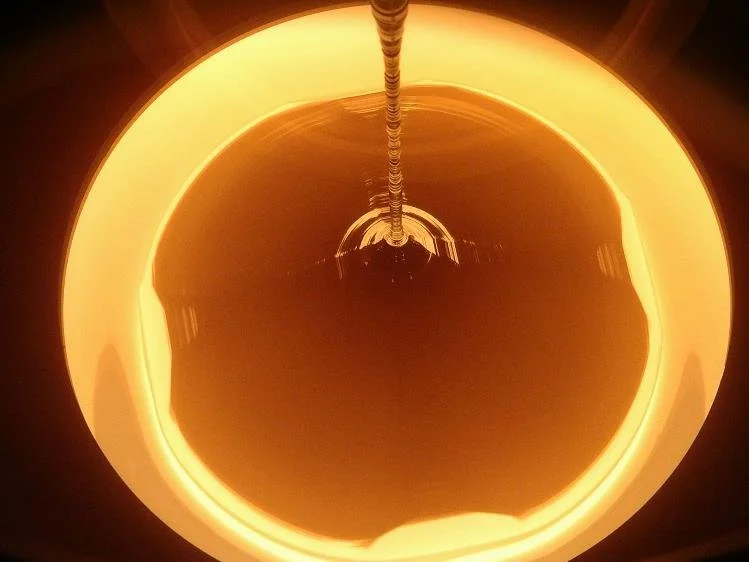
Silicon-based photovoltaic (PV) has become the world’s leading source of affordable green electricity. As a semiconductor technology, PV relies on ultra-pure, defect-free monocrystalline silicon ingots.
The state-of-the-art Czochralski (Cz) ingot pulling technologies have proven to be industrially robust and scalable beyond anyone’s predictions. Europe, the US, and Japan have developed these technologies. However, today, China holds 98% of the global ingot manufacturing capacity.
The unconstrained growth in China has created large overcapacity. This has led to market prices below manufacturing cost, industry shake-out, trade disputes, and market instabilities.
Furthermore, Europeans have large concerns related to forced labour, sustainability, safety conditions, and long working hours for plant workers in China.
How Europe should react to this situation may be debatable. However, the US and India have introduced new subsidies for PV manufacturing. In response, the EU’s Net-Zero Industry Act (NZIA), aligning with REPowerEU’s energy goals, sets a target of 30 GWp of annual PV ingot and wafer manufacturing capacity in Europe by 2030.
The predicted continued growth in PV represents an economic opportunity once the current overcapacity situation is resolved.
Barriers to competitive ingot manufacturing in Europe
Unfortunately, the reality is that Europe is far away from reaching the NZIA/REPowerEU’s goal.
The handful of PV ingot manufacturing plants outside China/Vietnam face different challenges. Plants in India have halted production, those in Norway are in bankruptcy, while plants in the USA are ramping up production.
In contrast, a handful of large industrial companies in the US are building ingot and wafer plants with IRA support. Despite the NZIA, no large manufacturing companies have announced ingot and wafer projects in Europe.
European ingot plant initiatives like Sunwafe (Spain) can acquire state-of-the-art plant designs, equipment packages, and extensive ramp-up support from Chinese suppliers. However, they face numerous challenges that currently lead to negative business cases. These challenges prohibit competitive European ingot manufacturing.
Firstly, ingot production is energy-demanding. Industrial electricity prices in Europe are, with some exceptions, higher than in China.
While Chinese manufacturers advertise a high degree of automation, many manual operations prevail. For example, workers fully dismantle each Cz puller’s hot-zone between cycles. This hot-zone consists of a complex set of around 100 furnace and insulation graphite parts.
One of the key differences is that ingot production in China operates in two or three shifts, while five shifts are standard in Europe. As widely known, personnel salaries are also higher in Europe than in China.
Importantly, Chinese Cz ingot technology does not meet European safety standards. This concerns, for example, water leaks into hot Cz pullers. The technology also shows large degradation rates for hot-zone materials, leading to instability and structure losses.
Europe faces additional challenges related to supply chains. Manufacturers must largely source raw materials, equipment, and consumables from the Chinese ecosystem.
This leads to long lead times, increases working capital and transport costs, and complicates testing and co-development. It can also cause costly quality complaints involving large volumes of affected goods already in transit.
These challenges exacerbate the risks of over-reliance on a single country. Trade disputes, for example, can create uncertainty and disrupt supply chains.
China temporarily stopped exporting PV manufacturing equipment to India. It is currently tightening exports, especially to projects in the US.
Rebuilding a strategic European PV value chain
PV is a great success story and has become one of the most important technologies in the world.
Europe needs to master this technology, including its manufacturing. The European Commission has already recognised this need through the NZIA and REPowerEU.
Therefore, Europe needs to establish the missing links in the value chain, such as Cz ingot production, and protect them.
We can compare this situation to food production in Norway. Norwegian food production is obviously not competitive but remains strategically important.
Subsidies and border protection support Norwegian farmers. Nevertheless, they operate on minimal margins, face difficult conditions, and continuously improve their operations. Norway still imports a lot of food but protects its core national production activities.
Re-establishing PV Cz ingot production and other critical PV value chain elements in Europe will require a similar approach: subsidies, border protection, innovation, and continuous improvement directed towards the specific European cost challenges mentioned previously.
Author: ©2026 RAAMS AS
